7 Signs Your Home Needs Residential Pressure Cleaning Right Now
7 Signs Your Home Needs Residential Pressure Cleaning Right Now
In short:
Residential pressure cleaning uses controlled water pressure to restore driveways, walls, patios, roofs, and exterior surfaces to a clean, safe condition. Most homes show visible warning signs long before owners act — green algae, black streaks, slippery walkways, and peeling paint are all signals that cleaning is overdue. Waiting too long turns a simple cleaning job into an expensive repair. Knowing the signs helps you respond at the right time.
Introduction
Most homeowners do not notice the damage until it is already expensive.Mold and algae spread silently across siding, roofs, and driveways. Black streaks appear on walls. Walkways turn slippery. Paint starts to peel. These are not cosmetic problems. They are warning signs that surface materials are under active biological and chemical attack. Safety becomes a real concern when algae coats entry steps and patios. A single slip and fall incident costs far more than a professional cleaning appointment.
Multi-story homes add another layer of difficulty. Reaching upper walls and rooflines safely with manual equipment is impractical for most homeowners. Ladder work at height creates serious injury risk — and still does not deliver the deep clean that professional pressure washing provides. Acting on the right signs at the right time protects your home, your family, and your investment. Here are seven signs you should not ignore.
What Is Residential Pressure Cleaning?
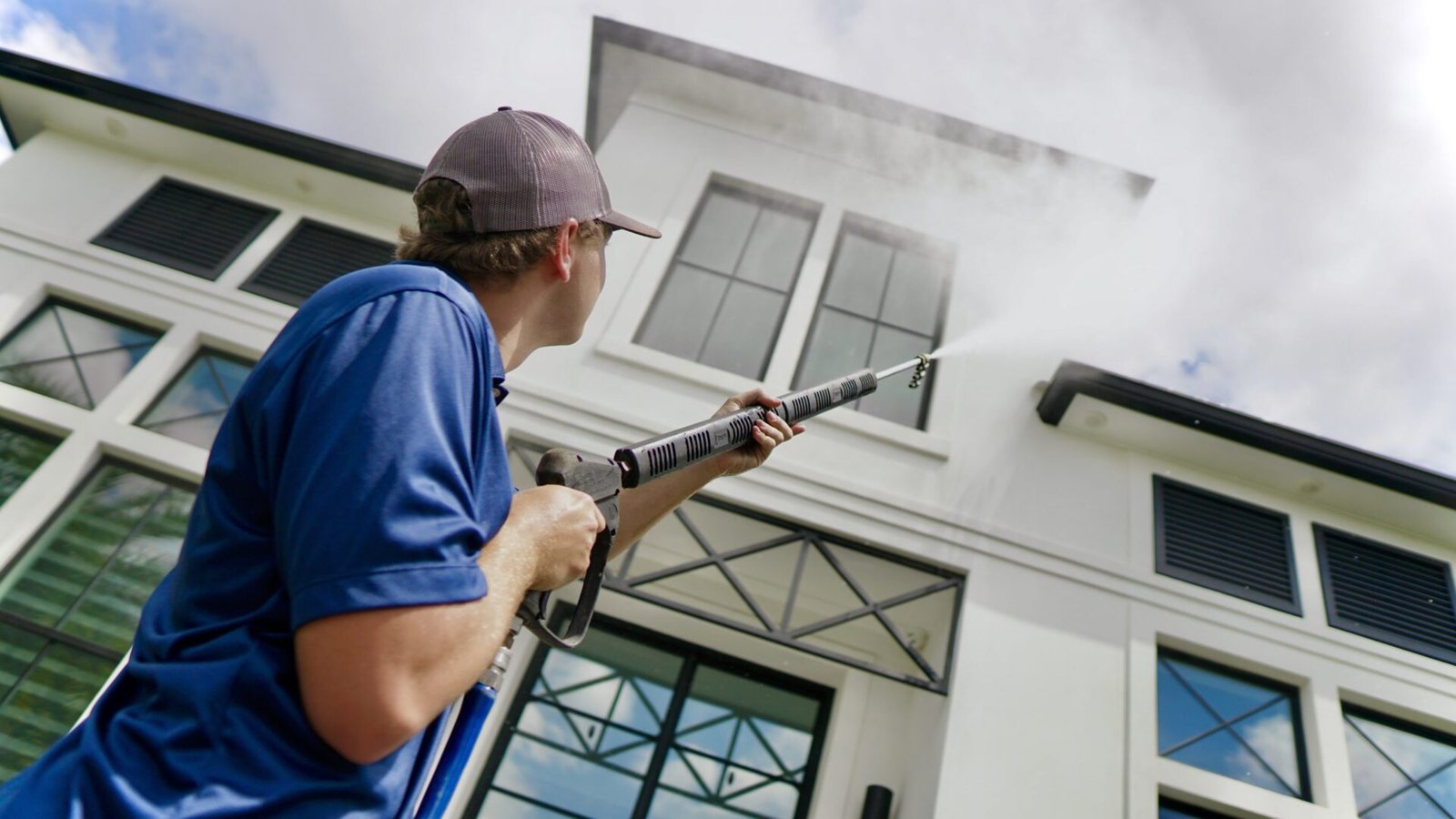
Residential pressure cleaning is a professional exterior cleaning method that uses high-pressure water — sometimes combined with biodegradable cleaning solutions — to remove stubborn dirt, mold, algae, oil stains, and biological deposits from home surfaces. It covers driveways, patios, exterior walls, roofs, fences, decks, and walkways. Unlike garden hose rinsing, professional home pressure cleaning delivers the pressure and precision needed to reach deep into surface pores and lift contaminants completely.
Residential pressure washing is not a one-size-fits-all process. Different surfaces require different pressure levels. Concrete driveways tolerate high pressure well. Painted siding and roof tiles need lower pressure or soft washing techniques to avoid surface damage.
Reach Us Today for Safe, Smart & Efficient Drone Cleaning Solutions!
Our drone cleaning services are designed to deliver fast, cost-effective, and high-quality results without the risks of traditional methods.
How Residential Pressure Cleaning Works
- Step 1 — Inspection Technicians evaluate the full exterior. They identify problem areas — mold zones, heavy staining, algae patches, and surfaces showing early signs of material degradation.
- Step 2 — Surface Check Each surface material is assessed separately. Concrete, brick, painted wood, stucco, and roof tiles all have different tolerances. This step determines which pressure level and solution is safe for each area.
- Step 3 — Method Selection Hard surfaces like driveways and stone get high-pressure cleaning. Delicate surfaces like painted walls or roof shingles get soft washing — low pressure combined with cleaning agents that break down biological growth without force.
- Step 4 — Cleaning Process Technicians apply cleaning solutions where needed, then use pressure washing equipment to systematically clean all target surfaces. Stubborn stains and deep algae growth are treated with extended dwell time before rinsing.
- Step 5 — Rinse All loosened debris, contaminants, and cleaning solutions are rinsed away completely. Runoff is managed to protect surrounding landscaping and drainage systems.
- Step 6 — Post-Clean Maintenance Plan After the job, technicians recommend a maintenance schedule. Most residential properties benefit from annual or biannual pressure cleaning depending on local climate and surface exposure.
7 Signs Your Home Needs Pressure Cleaning Right Now
- Step 1 — Green or Black Streaks on Walls Green means algae. Black means mold or mildew. Both are actively breaking down your exterior surface coating. If you see streaking on siding or walls, cleaning is already overdue.
- Step 2 — Slippery Driveways or Walkways Algae and moss make hard surfaces dangerously slick — especially after rain. Slippery entry surfaces are a safety liability. Driveway pressure cleaning removes the growth before someone gets hurt.
- Step 3 — Dark Stains on the Roof Roof discoloration from algae and lichen is one of the most overlooked signs. Roof pressure cleaning or soft washing removes these deposits and extends the life of shingles and tiles significantly.
- Step 4 — Peeling or Bubbling Exterior Paint Paint fails faster when moisture gets trapped beneath it — often caused by algae or mold sitting on the surface. Wall pressure washing removes the biological layer and prepares surfaces for repainting if needed.
- Step 5 — Dirty or Stained Patio Surfaces Patios collect organic debris, oil drips, and moisture stains over time. If your patio looks permanently grey or stained, patio pressure washing restores it to a clean, safe, presentable surface quickly.
- Step 6 — Visible Mold Around Windows and Vents Mold near openings is not just a surface issue. It signals moisture buildup and potential infiltration. Exterior surface cleaning around windows and vents stops mold from spreading inward.
- Step 7 — You Cannot Remember the Last Time It Was Cleaned If you cannot remember when your home was last pressure washed, it is overdue. Most surfaces accumulate enough biological growth and pollution deposits within 12 months to warrant professional cleaning.
Key Benefits of Regular Home Pressure Cleaning
- Longer surface life — Removing mold and algae before they penetrate coatings protects paint, siding, and structural materials from accelerated degradation
- Better curb appeal — Clean driveways, walls, and patios dramatically improve your home's appearance and perceived value
- Lower repair costs — Annual cleaning costs a fraction of what repainting, resealing, or replacing damaged surfaces costs
- Improved safety — Eliminating algae from walkways and entry surfaces removes slip and fall hazards immediately
- Faster results — Professional residential surface cleaning completes in hours, not days, with no major disruption
- Healthier living environment — Removing mold and biological growth near windows and vents improves outdoor air quality around the home
Residential and Commercial Applications
Single-Family Homes Driveways, patios, walls, and roofs all benefit from annual home pressure cleaning. Homes surrounded by trees or in humid climates accumulate biological growth faster and may need cleaning twice a year. Apartment Buildings and Condominiums Multi-unit residential buildings require consistent exterior maintenance across shared surfaces. Commercial building exterior cleaning services handle large residential structures efficiently while minimizing disruption to residents. Office Buildings Clean office exteriors signal professionalism and attract quality tenants. Building high-power washing in New York removes stubborn pollution deposits from commercial facades quickly and safely.
Warehouses and Factories Industrial facilities accumulate heavy surface deposits from exhaust and chemical exposure. Regular exterior pressure cleaning prevents long-term surface corrosion and keeps facilities compliant with maintenance standards.Pre-Sale Real Estate Curb appeal drives buyer perception. Property owners preparing to list benefit significantly from professional exterior cleaning services near them before photos or showings.
Why Modern Pressure Cleaning Beats DIY and Traditional Methods
| Factor | DIY / Traditional | Professional / Drone-Assisted |
|---|---|---|
| Upper floor access | Dangerous ladder work | Safe drone or pole systems |
| Cleaning precision | Inconsistent pressure | Surface-matched pressure levels |
| Mold removal | Surface-only | Deep biological elimination |
| Time required | Full weekend | Completed in hours |
| Risk of surface damage | High | Low — expert-controlled |
| Cost over time | Higher (repeat attempts) | Lower (done right first time) |
DIY pressure washing is tempting. But wrong pressure settings damage paint, crack grout, and strip surface coatings. For upper walls and rooflines, ladder work creates real injury risk. Professional residential pressure cleaning delivers better results faster — and protects surfaces in the process.
Expert Insight
Exterior Drone Cleaning is a technology-driven exterior cleaning company serving homeowners, property managers, and facility owners across the USA. Their team combines surface inspection expertise, method-matched cleaning systems, and advanced drone technology to deliver safe, precise, and consistent results. For multi-story homes and complex facades, drone-assisted systems eliminate the need for scaffolding or risky ladder work entirely. Their process is built around one goal: protect your property while restoring it to its best condition — efficiently and safely, every time.
Conclusion
Your home is showing you the signs. The question is whether you act on them in time.Green algae on walls, black streaks on the roof, slippery driveways, peeling paint — these are not minor cosmetic issues. They are active damage warnings. Every month you wait, biological growth goes deeper into surface materials and repair costs go higher. Residential pressure cleaning is one of the most cost-effective maintenance investments a homeowner can make. Done annually, it protects surfaces, prevents safety hazards, and keeps your property looking its best year-round.
Modern cleaning technology has made the process faster, safer, and more affordable than ever — including for multi-story homes where traditional methods simply do not work.
Explore Exterior Drone Cleaning services or request a consultation today.
FAQs
Residential pressure cleaning is a professional service that uses high-pressure water to remove dirt, mold, algae, stains, and biological growth from home exterior surfaces. It covers driveways, walls, patios, roofs, and walkways. It is more effective than garden hose cleaning and uses surface-specific pressure levels to avoid damage.
Most homes need professional pressure washing once a year. Homes in humid climates, near trees, or in high-pollution areas benefit from cleaning every six months. Signs like green algae, black streaks, or slippery driveways indicate cleaning is needed immediately regardless of schedule.
No. High pressure can damage painted wood, stucco, roof shingles, and older siding. Professionals use soft washing — low pressure combined with cleaning solutions — for delicate surfaces. Hard surfaces like concrete driveways and brick handle high-pressure washing well. Always match the method to the surface.
Pressure washing uses high-pressure water to blast away heavy deposits from hard surfaces. Soft washing uses low pressure and biodegradable cleaning agents to gently remove mold, algae, and biological growth from delicate surfaces without causing damage. Most professional residential jobs use a combination of both.
Professional pressure cleaning removes active mold and algae from exterior surfaces completely. However, mold can return if conditions are favorable — shade, moisture, and organic debris. Regular annual cleaning and applying surface sealants after washing significantly reduces how quickly biological growth returns.
Reach Us Today for Safe, Smart & Efficient Drone Cleaning Solutions!
Our drone cleaning services are designed to deliver fast, cost-effective, and high-quality results without the risks of traditional methods.